Who writes Skool reviews?
The reviews you find first come from five kinds of writers, and only one kind runs a paid program on Skool.
| Where | Who writes there | What they mostly say |
|---|---|---|
| Trustpilot | Members and buyers of paid Skool groups | Charges, refunds, support, and groups that didn't deliver |
| A Reddit thread on Skool | People deciding whether Skool is legit | A split between MLM worries and a community tool with some bad groups on it |
| Creators' review blogs | Owners who started on Skool, often with a referral link | Quick to set up, community and classroom in one place, members from Skool's Discovery |
| Ruzuku's review | A rival course platform | Course tools Skool doesn't have, like quizzes and certificates |
| Google Play | People using Skool's phone app | The app itself: video playback, notifications |
Of the 40 newest Skool reviews on Trustpilot, 25 come from people who say they joined or paid for a group. Exactly one says they run a group. The other 14 don't say. One review shows up twice, so that's 39 different reviews, and 26 of them are about a charge, a refund or Skool's support.
25 say they joined or paid for a group
1 says they run a group
14 don't say
What do Skool members complain about?
Money, mostly. 15 of the 39 reviews are about a charge the reviewer didn't expect or couldn't stop. A reviewer wrote in October 2026 that leaving a paid group “is an absolute maze. The cancel link is buried deep in the settings.”
9 reviews are about a refund. On Skool, refunds are the owner's call, and cancelling doesn't refund anything by itself. One member put it this way: refunds “are entirely at the discretion of individual community owners, and Skool's own support team has limited power to intervene if an owner simply stops responding.”
17 say Skool's support didn't answer or couldn't help, and 10 are about paid groups the reviewer felt didn't deliver. “There is no accessible customer service when a creator hosted on their platform refuses to respond,” a member wrote on November 12, 2026.
Why do member complaints land on the group owner?
Because members see Skool's name on everything they touch. They sign in at a group address on skool.com, often in Skool's own phone app. They pay on Skool's checkout, and you can't connect your own Stripe. When a charge goes wrong, they ask Skool's support, then you. We found nothing in Skool's help center about putting your own name on that app.
Your own group can get reviews too. Only members who pay a recurring price can review it, after 30 days, and Skool's support can't remove a review. Skool says groups with the best ratings will benefit from Growth Boost, its program that sends you new members for a 30% cut plus fees. For now, Skool says those reviews are visible only to the group's members.
| Who handles it | Your platform on Bold | A paid Skool group |
|---|---|---|
| Where members sign in | Your domain, and your own iOS and Android apps on the Academy plan | A group address on skool.com, and Skool's app |
| Who takes the payment | Your billing, usually Outseta, with payments by Stripe | Skool, on its own merchant account |
| Who sets refund terms | You | You. Skool tells members to contact the group's admins |
| Who answers questions between calls | You, from your recordings | You or your team, in the feed or on the next call |
What do Skool group owners say?
Skool is a great place to start a community, and the owners who review it agree. They like how fast it gets one going: a feed, a classroom and a calendar, plus points and levels that keep members posting. The gaps they name show up later. One owner's four-year review says Skool doesn't let you change brand colors and fonts, and that the member export “covers people, not content.” Ruzuku, a rival course platform, says Skool has no completion certificates, quizzes or assignments, and we found no quiz or certificate feature in Skool's help center either.
If your program runs on weekly calls, here's what happens to Skool call recordings.
What does Bold change for a paid program?
On Bold, the program carries your name from sign-in to answer. Members ask a question and get your answer from your recordings, linked to the minute you said it. When the answer isn't there, Bold says so, and the question goes on your next call's agenda.
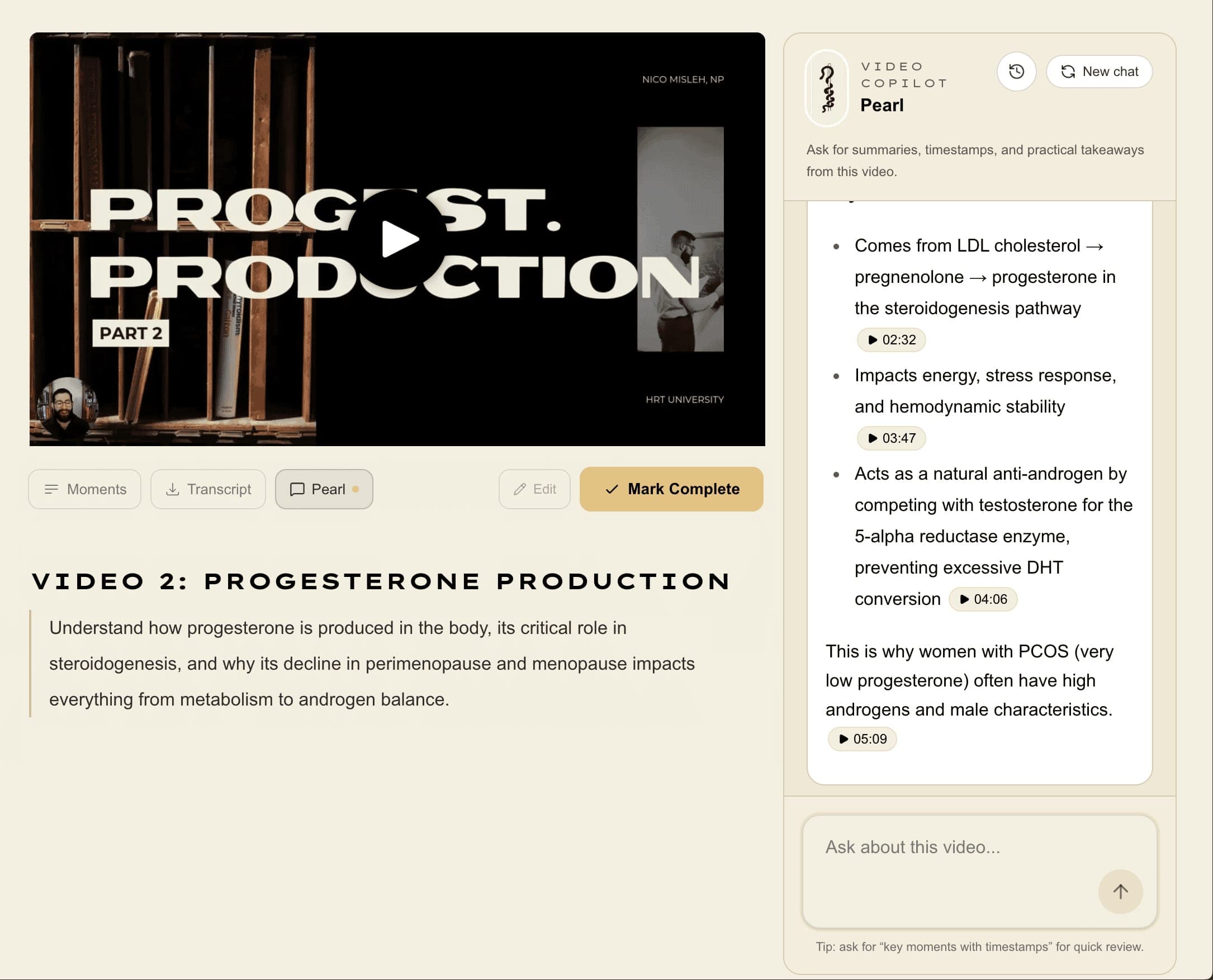
Once members can ask at any hour, they ask. HRT University's members asked 20 times as many questions on Bold: about 500 a week, up from 25 a week in its live Q&A. It doubled its membership price after adding Bold.
We move your Skool classroom, call recordings and members for you. Here's how a move from Skool works and what Bold costs. Every plan starts with a call.
Skool reviews FAQ
Is Skool legit or a scam?
It's legit. Skool is a real software company. The scam complaints in its reviews are about paid groups hosted on it, not the platform itself.
Can you really make money on Skool?
Yes. Skool pays your sales out every Wednesday, minus a fee on each one, and you pay for your plan on top. Our Skool pricing guide works out the fees for a 300-member program, Growth Boost included.
How much is Skool per month?
$9 a month on Hobby or $99 on Pro, after a 14-day free trial. On top of that, Skool takes 10% plus 30 cents of every sale on Hobby, and 2.9% plus 30 cents on Pro (3.9% plus 30 cents on a sale above $900).